Container Terminal Operating System Cloud SaaS Container Terminal Operating System CTMS/TOS Gate automation, vessel planning, yard optimisation, billing, and real-time KPIs — a SaaS CTMS/TOS that runs harbor terminal operations and container transportation flows from a single dashboard.
Schedule a Demo See Core Modules
Legacy terminal operating systems were built for smaller vessels and simpler cargo operations. Today's terminals in the global logistics market face 24,000-TEU ships, new ESG mandates, carrier communication demands, and customers expecting real-time data flow from their supply chain management systems. That gap is costing your business money every day compared to modern CTMS environments.
Many transport vehicles queue for over 90 minutes because general gate processing means manual ID checks, paper-based container verification, and radio calls to the yard. Every extra minute at the gate cascades into yard delays, impacting overall turnaround times and missed vessel windows.
Without advanced AI-driven block assignment and intelligent container management, units end up wherever the stacker operator has to make a decision. This allows 30% more re-handles, wasted crane cycles, and yard planners fighting fires in disconnected systems instead of streamlining cargo throughput for better performance.
Expert crane splits are often still done in standalone systems and spreadsheets. Vessel stowage plans arrive by email. Berth management and allocation is first-come, first-served rather than data-driven. The result: idle crane time, missed ETDs, and carriers looking for smoother service at other ports.
Storage charges calculated manually. Handling fees reconstructed from gate logs. Invoices delayed by days. Without automated tariff rules tied to real operational events, terminals leave money on the table every single month. Upgrading to unified management systems helps increase revenue capture and replaces legacy software.
A container terminal management system (CTMS) is the platform that orchestrates every cargo operation inside a container terminal — from vessel arrival and gate processing to yard stacking, equipment dispatch, and invoicing. It's the central nervous system of the facility, connecting all disparate port systems.
Unlike a basic yard management tool or home-grown software, a modern CTMS covers the full operational chain: berth planning, crane split logic, rail freight interface, reefer monitoring, customs integration, and real-time KPI dashboards. Every department — operations, planning, billing, maintenance — works from the same live data within the CTMS, ensuring safety, better container tracking, and a more integrated working environment compared to fragmented systems.
Our SaaS CTMS was built for container terminals, inland container depots, marine terminals, and dry ports that need more capacity without a larger IT footprint, supporting day-to-day ops for both large hubs and small private facilities as well as inland multimodal sites.
Not a legacy TOS repackaged for the cloud. Purpose-built SaaS architecture designed to outperform older operational systems with modular deployment, REST & GraphQL APIs, real-time digital twin, and zero-downtime weekly updates. Go live in 7 days.
Eight key modules cover every terminal workflow, including gate and yard management. Each module supports a specific user group and replaces disconnected third-party tools with one unified CTMS that improves operational efficiency.
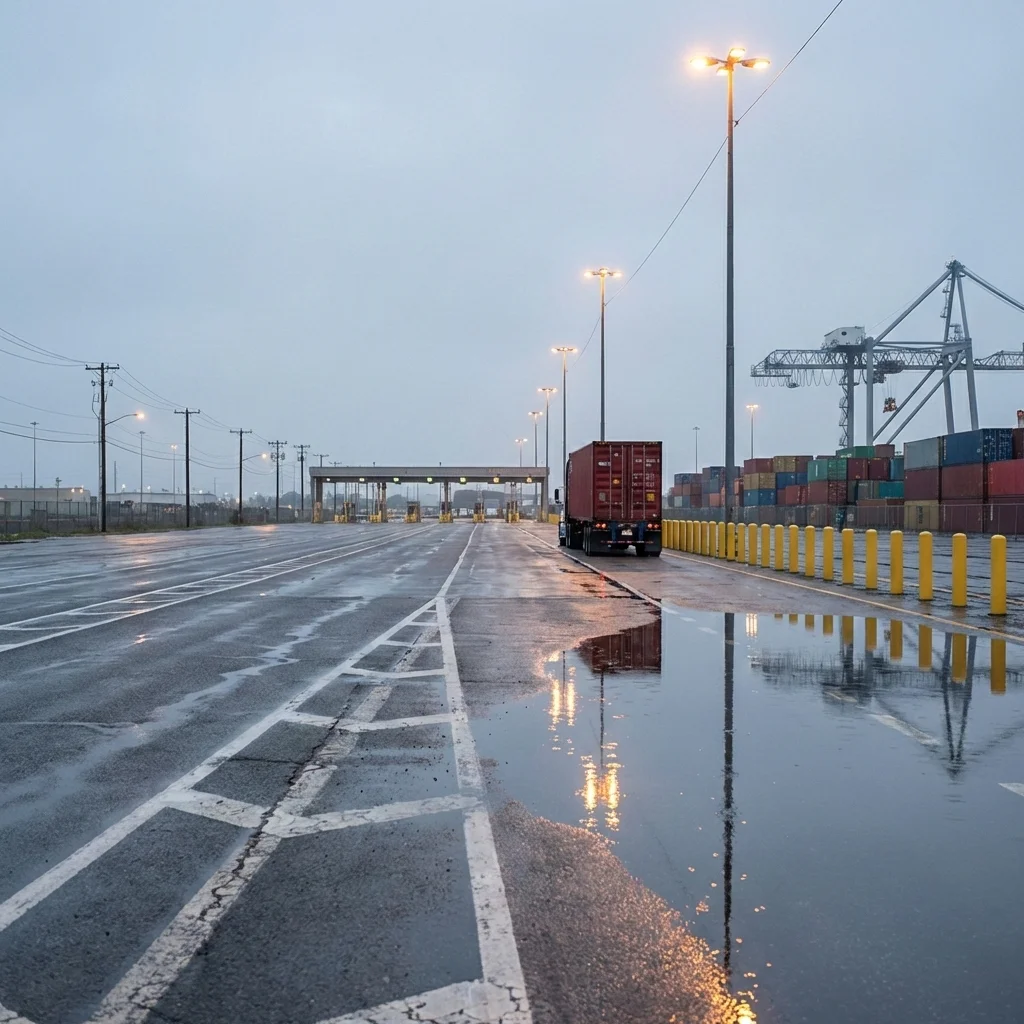
Automated gate processing with licence-plate and container number recognition. Truck slot booking, e-TIR document integration, digital condition capture, and location-aware driver instructions lower turn time from 90 minutes to under 25.
AI-driven block assignment with RTG workload balancing and real-time chassis pool management. Reduces re-handles by 30%, improves yard fluidity, and optimises container handling equipment utilization.
Berth window optimisation, crane split logic, and stowage instruction interface. +12% berth throughput, lower idle crane time, and fewer resource conflicts during peak vessel operations.
Rules-based invoicing with configurable storage rates, handling fees, and line-specific tariffs. EDI to shipping lines and forwarders. Invoice cycles move from days to hours with fewer rating disputes.
Real-time temperature logs, PTI tracking, reefer event alerts. Supports dry, reefer, OOG, and hazardous containerized cargo types. Protects sensitive cargo, improves cold chain reliability, and automates compliance records.
Rail Interface Management Manage rail siding operations: wagon tracking, load/discharge plans, railway coordination, and railcar documentation. Synchronise rail and truck workflows with storage systems to maximise intermodal and multimodal throughput and support ongoing terminal optimization.
Live KPI dashboards track gross moves per hour, crane productivity, truck turn time, and berth utilization in real time. Role-based reports give terminal managers, supervisors, and shipping line partners practical insights without exporting data.
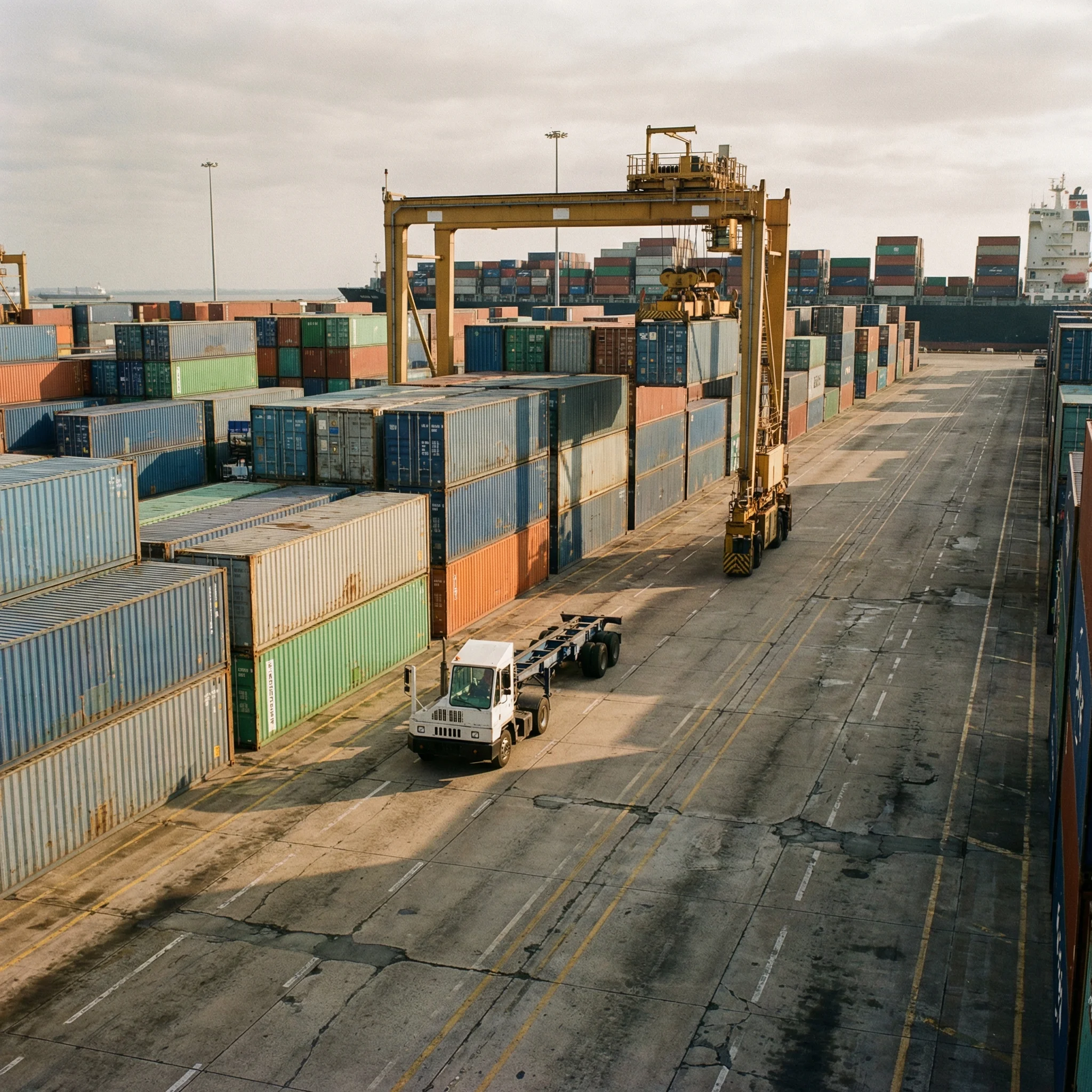
A modern terminal operating system must handle complete workflows from berth-window assignment through container gate-out and automated invoicing.
Vessel approaches port. The CTMS calculates optimal berth allocation based on vessel LOA, draught, cargo profile, crane availability, and departure targets. Crane splits are generated automatically. The stowage interface links to the vessel planner for discharge/load sequencing.
Trucks arrive at the gate. OCR reads container numbers and licence plates. The software validates each booking, assigns a yard position, and directs the driver. Truck turn time: under 25 minutes, with no manual data entry or radio queues.
Containers are tracked in real time: block, row, bay, tier. RTG and reach stacker work queues are optimised automatically. Yard planners see live utilisation maps. Reefer positions have continuous temperature monitoring. Every move is logged.
Every container event triggers billing rules. Storage, handling, reefer plug-in, and crane charges are calculated automatically. COPARN, CODECO, and COARRI messages fire in real time. KPI dashboards give operations managers instant visibility into throughput, dwell time, crane productivity, and value at risk.
Aggregated across terminal deployments. Individual results vary by terminal size, cargo throughput, previous automation level, and demand profile.
Our SaaS CTMS runs on a modular, multi-tenant cloud architecture. Weekly zero-downtime releases keep every module current without disrupting live operations. There is no hardware to maintain, no version sprawl, and no IT team needed on-site.
Security is enterprise-grade: AES-256 encryption at rest/in transit, ISO 27001 and SOC 2 Type II audited infrastructure, SAML 2.0 SSO, and role-based access control across all terminal roles. Active-active data centre replication ensures 99.9% uptime.
On the integration side, REST and GraphQL APIs connect to any PCS, ERP, customs portal, or internal application. EDIFACT messages — COPARN, CODECO, COARRI — are generated automatically from operational events. If a shipping line uses an API portal, we support that too.
If your terminal still runs on on-premise TOS software from the 2000s, this is what the future-ready technology gap looks like.
| Capability | SaaS CTMS | Legacy TOS / Manual |
|---|---|---|
| Gate processing | ✓ OCR + appointment, under 25 min | Manual, 60–90 min turns |
| Yard planning | ✓ AI block assignment, live map | Static plans, high re-handles |
| Berth & vessel management | ✓ Automated crane splits & berth optimisation | Spreadsheet-based allocation |
| Billing & tariffs | ✓ Rules-based, real-time invoicing | Manual calculation, multi-day delay |
| EDI with shipping lines | ✓ CODECO/COARRI/COPARN automatic | Manual or no EDI |
| Reefer monitoring | ✓ Real-time temp, PTI, alerts | Manual rounds, paper logs |
| Equipment dispatch | ✓ Optimised work queues, live tracking | Radio-based, no visibility |
| KPI dashboards | ✓ Real-time, role-based, mobile | End-of-day reports, spreadsheets |
| Deployment time | ✓ 7 days, no hardware | 6–18 months, servers required |
| Updates | ✓ Weekly, zero-downtime | Annual, requires maintenance window |
No heavy IT projects. No months of configuration. Our SaaS CTMS goes live in a single week — here's how.
Process mapping, KPI baseline review, infrastructure assessment. We identify your operational priorities and map them to CTMS modules. No hardware required.
System setup: yard zones digitised, gate logic configured, billing flows adapted, berth layout mapped. Equipment types, user roles, and tariff schedules loaded.
Fast-track onboarding via online workshops and multilingual modules for all user roles — gate operators, yard planners, billing staff, and terminal managers.
Full rollout with live support. KPI monitoring and fine-tuning from day one for the new system. Dedicated success engineer assigned for the first 30 days post-launch.
Our cloud-based CTMS integrates with any Port Community System or ERP using REST and GraphQL APIs. This enables real-time synchronisation of container inventory, vessel milestones, gate moves, and invoicing events. We support both EDIFACT-based messaging (CODECO, COARRI, COPARN) and modern API portals used by major shipping lines. On the ERP side, webhooks push financial data to SAP, Oracle, or custom systems in real time — no batch imports.
Yes. The CTMS exchanges EDI with shipping lines through EDIFACT messages such as CODECO, COARRI, and COPARN, while API connectors support modern carrier portals. Each message is tied to operational records, so teams can trace status changes without manual reconciliation.
Our standard deployment takes 7 days: Setup completes in a single afternoon, followed by onboarding and launch within 48 to 72 hours. Because it's SaaS, there's no hardware to install, no servers to configure, and no lengthy IT project. A dedicated success engineer stays with your team for the first 30 days to fine-tune workflows and KPI targets.
Absolutely. The system scales from a single-berth inland container depot to a large multi-berth port terminal and can be deployed across multiple terminal and depot locations. Smaller facilities use only the modules they need — gate, yard management, billing — then add berth planning, rail modules, or more capacity as demand grows. The SaaS model avoids upfront capital investment, and the CTMS grows with your throughput.
Every terminal is different. Tell us about yours, and we'll walk you through the modules that matter most to your operation — from gate automation to berth planning to real-time KPI dashboards.
Schedule a Demo